 Plan Renovation Cleanup Before the First Hammer Swing
Renovation feels exciting until the trash starts piling up. Old cabinets, ripped-out drywall, broken tiles, and packing from new materials can take over your driveway fast. If you wait to plan cleanup, you can blow your budget, slow down your crew, and stress out your neighbors.
Planning your renovation waste before demo helps you stretch your roll-off dumpster space, stay on schedule, and keep the jobsite safer. When you map out what you are throwing away, what can be recycled, what can be donated, and what is hazardous, you make smarter choices and avoid last-minute problems.
A simple renovation waste checklist keeps things under control. We walk the space, inventory materials, sort into different streams, and line up the right size dumpster and any extra junk removal help. Below, we will walk through common renovation debris, local-style recycling ideas, hazardous waste rules in New York counties, and how to choose and schedule a roll-off dumpster that fits your project.
Walk Through Your Space and Inventory Renovation Debris
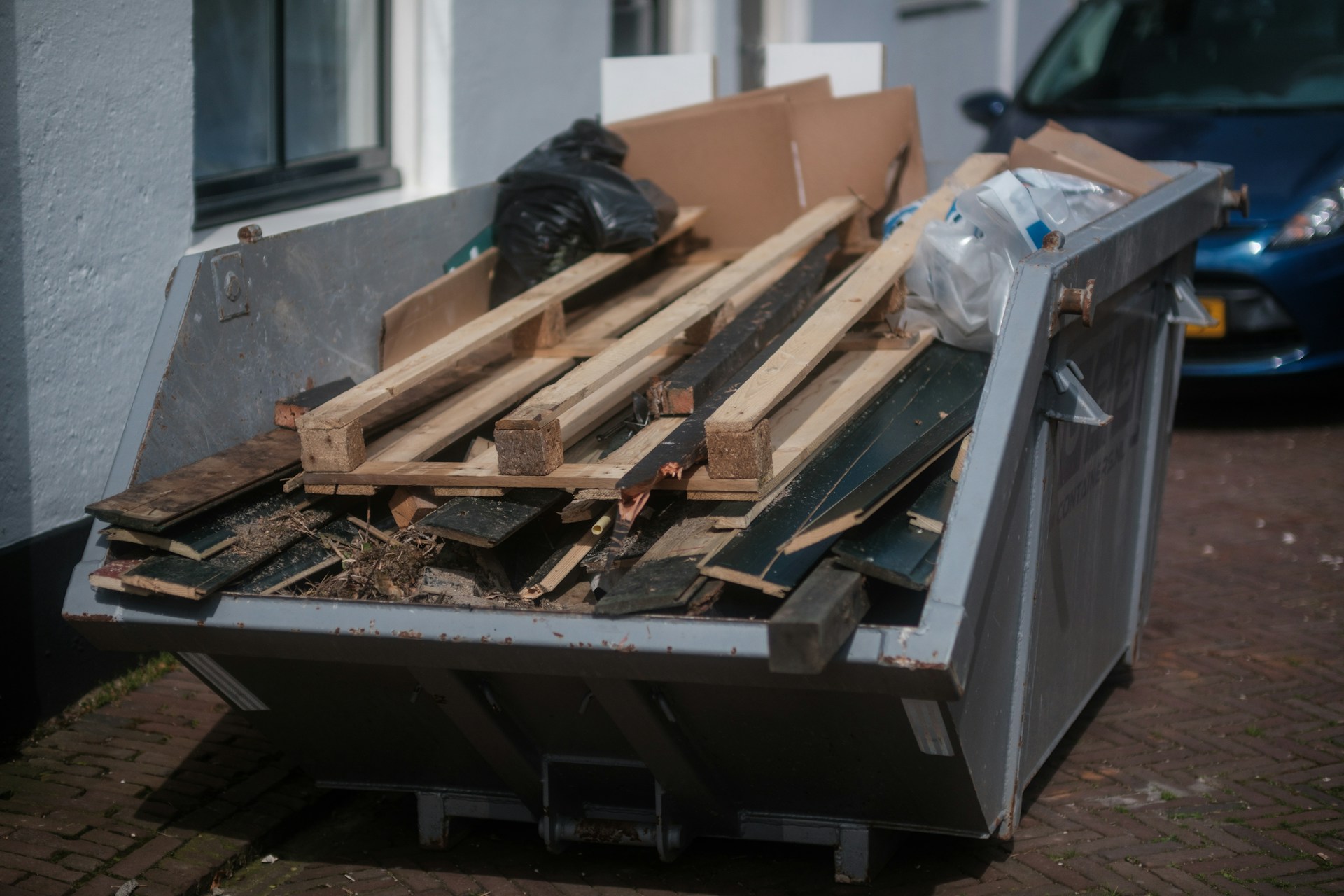
Before the first wall comes down, do a slow walkthrough of every room or area you are touching. Take notes on what will likely come out. Common renovation debris includes:
- Drywall and plaster
- Wood framing, trim, and flooring
- Old cabinets and countertops
- Doors, windows, and fixtures
- Roofing shingles and sheathing
- Insulation and house wrap
- Yard and landscaping debris
- Cardboard, plastic, and foam from new materials
Think in terms of project type, not exact measurements. For example, a small bathroom update will create far less debris than a full kitchen gut or whole-house cleanout. A commercial office remodel can quickly fill larger containers with old furniture, partitions, and carpet.
You can roughly match project type to debris volume like this:
- Small bathroom or single room refresh, likely one small roll-off dumpster
- Kitchen gut or deck removal, a mid-size dumpster
- Roof replacement or multi-room project, a larger dumpster
- Full house cleanout or commercial remodel, the largest sizes or a mix of dumpster and junk removal
In the fall, many property owners in Westchester, Putnam, Dutchess, and Rockland Counties combine exterior repairs with yard cleanups. Wet leaves, branches, and saturated debris can add weight and make access tricky. Make sure the area where the dumpster will sit stays clear of mud, puddles, and leaf piles so the truck can get in and out safely.
Sort Materials for Reuse, Recycling, and Donation
Once you know what is coming out, plan how you will separate it. A simple zone system in your driveway, garage, or yard keeps things easy for everyone.
Set up three main areas with clear labels or tape:
- Trash: mixed construction debris that will go into the roll-off dumpster
- Recycling: metal, clean wood, cardboard, and certain masonry materials
- Donation or reuse: items that still have life left in them
Materials that often can be reused or recycled include:
- Metals like copper, aluminum, and steel from pipes, fixtures, and hardware
- Clean dimensional lumber that is not painted or soaked in chemicals
- Bricks, concrete pieces, and pavers, when local options allow
- Cardboard from appliances, cabinets, and fixtures
- Gently used cabinets, interior doors, lighting, and hardware that could be donated
By sorting as you go, you keep unnecessary items out of the roll-off dumpster. That can help keep loads lighter and may reduce how many containers you need. It also supports more sustainable renovation habits, which many communities appreciate.
If you are unsure what is commonly recycled in your area, a local hauler can share general guidance based on what facilities in the region tend to accept. Getting those answers before you start demo keeps the process smooth.
Know What Cannot Go in a Roll-Off Dumpster
Not everything belongs in a roll-off dumpster. Some items are unsafe for drivers, harmful to the environment, or simply banned by local rules. Before you toss something, check whether it is allowed.
Common hazardous or restricted materials include:
- Paints, stains, and paint thinners
- Solvents and strong cleaners
- Automotive fluids like oil, antifreeze, and brake fluid
- Pesticides and herbicides
- Pool and spa chemicals
- Propane tanks and fuel cylinders
- Asbestos-containing materials
- Certain electronics
- Refrigerators and AC units with freon
- Medical or biological waste
These items usually cannot go into standard dumpster loads because of state and local regulations, landfill rules, and safety concerns at transfer stations. They need special handling.
Safer options often include:
- County hazardous waste drop-off days and events
- Scheduled hazardous material collection programs
- Licensed asbestos and lead paint abatement contractors
- Specialty recycling programs for electronics and appliances
Before you book, it helps to confirm with your hauler what is allowed in their containers and what must be handled separately, so there are no surprises at pickup.
Choose the Right Roll-Off Dumpster Size and Schedule
Roll-off dumpsters come in several sizes, and choosing the right one starts with your debris inventory. While sizes may vary, here is a simple way to think about them:
- Smaller dumpsters, good for attic cleanouts, small bathrooms, or light yard work
- Mid-size dumpsters, common for kitchen renovations, deck removals, and single-room guts
- Larger dumpsters, better for roofing jobs, multi-room remodels, or heavy materials
- Extra-large dumpsters, often used for whole-house cleanouts or bigger commercial projects
A local hauler can talk through your project and match the size to the type and amount of debris you expect.
Timing and logistics matter too. Plan delivery at least a day before demolition so the container is in place when you need it. Think about:
- Clear access for the truck, no low branches, wires, or tight corners
- Protecting your driveway with boards if recommended
- Keeping space open for material deliveries and worker parking
- Planning pickup so the dumpster is gone before new finishes arrive
Common questions include:
What size dumpster do I need?
Match the size to your project type and debris inventory. For example, a kitchen gut usually needs a mid-size, while a full house cleanout may call for something larger.
How much does dumpster rental cost?
Pricing depends on the dumpster size, the length of the rental, and the type of debris. Local companies typically provide clear quotes so you know what is included.
What can I put in a dumpster?
Most construction and household debris is fine, but hazardous materials, chemicals, and restricted items are not. It is always best to confirm your specific items before loading.
How long can I keep a dumpster?
Rental periods can vary. Planning your work around that time window helps you avoid rushed demo or extended project mess.
Do you offer same-day delivery?
During busy renovation seasons, some haulers may offer same-day or next-day delivery when schedules allow. Booking early gives you more options.
Separate Hazardous Waste and Protect Your Home and Crew
Before demo, it helps to set aside time to hunt for hazardous items so they do not get tossed by mistake. A quick checklist might include:
- Oil-based paints, stains, varnishes, and sealers
- Spray paint cans and solvents
- Old cleaners, bleach, and ammonia products
- Batteries of all types
- Fluorescent bulbs and some LED or specialty lights
- Old thermostats or devices that might contain mercury
- Any container without a readable label
Store these in a separate, clearly marked area away from kids, pets, and the active work zone. Keep them upright and out of direct sun until you can bring them to approved county facilities or collection events.
Simple safety tips help protect everyone on the project:
- Wear gloves and a mask when handling older materials or dusty items
- Never mix unknown liquids in a single container
- Keep a list on your phone of local hazardous waste resources for your county
- Do not try to remove suspected asbestos or serious hazards on your own
Use This Renovation Waste Checklist to Book with Confidence
A little planning goes a long way. When you walk your space, estimate your debris, sort materials into trash, recycling, and donation, and pull hazardous items aside, the whole renovation feels easier and more organized. Cleanup stops being an afterthought and becomes part of the plan.
Once you have that checklist in place, it is much simpler to match your needs with the right roll-off dumpster size and rental period. A local hauler like Mr Cheapee Inc., serving Westchester, Putnam, Dutchess, and Rockland Counties, can review your project details, explain what can go in the container, and help you choose between a dumpster, junk removal, or a mix of both. Keeping this checklist handy for every future remodel protects your budget, supports a safer jobsite, and helps your project move from demolition to done without a driveway full of surprise debris.
Get Started With Your Project Today
If you are ready to clear out clutter or prepare a job site, we can deliver the right size roll-off dumpster right where you need it. At Mr Cheapee Inc, we help you choose the container that fits your timeline, space, and budget so your project keeps moving without delays. Tell us about your cleanup, renovation, or construction needs and we will schedule prompt delivery and pickup. Have questions or need a quick quote? Just contact us and our team will walk you through the next steps.

Leave a Reply